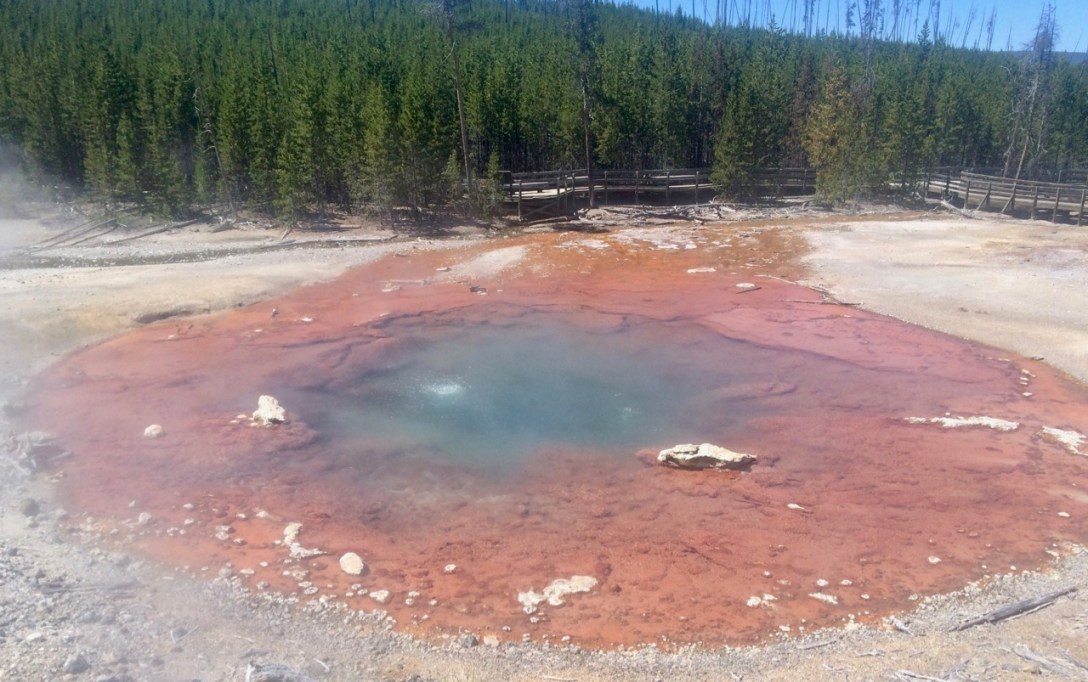
Pic: Echinus Geyser, the largest acid-water geyser in the world, has a pH similar to that of orange juice. Norris Geyser Basin, Yellowstone NP, WY
Yellowstone is an incredible place. It has immense physical beauty: nearly 3500 square miles of alpine meadows, thundering waterfalls, and frigid high-altitude lakes both modestly-sized and enormous. The area has cultural significance in ancient history — humans have hunted in the area for more than 11,000 years — and in modern times — Yellowstone was the world’s first national park[1]. The Greater Yellowstone Ecosystem provides essential habitat for recovering populations of grizzly bear, gray wolf, and the largest remaining herd of free-ranging bison.
These attributes alone would make Yellowstone an unmissable destination, but the valley also contains over 10,000 hydrothermal features, fully half of the world’s inventory. These stinky, steamy, explosive, and colorful oddities are powered by chemistry, heat-loving bacteria, and the Yellowstone supervolcano.
I breakfasted at Grebe Lake, hiked back to Isa, then drove toward West Yellowstone with its restaurants and motels and showers. On the way, I pulled into a very full parking lot at Norris Geyser Basin. “What are all these people doing here?” I wondered. “Oh, right, it’s Sunday.”
I did not yet know of the incredible variety and density of attractions in this literal hotspot. It’s easy to overuse the term “otherworldly” but these few square miles are clearly not business-as-usual for the earth’s surface.
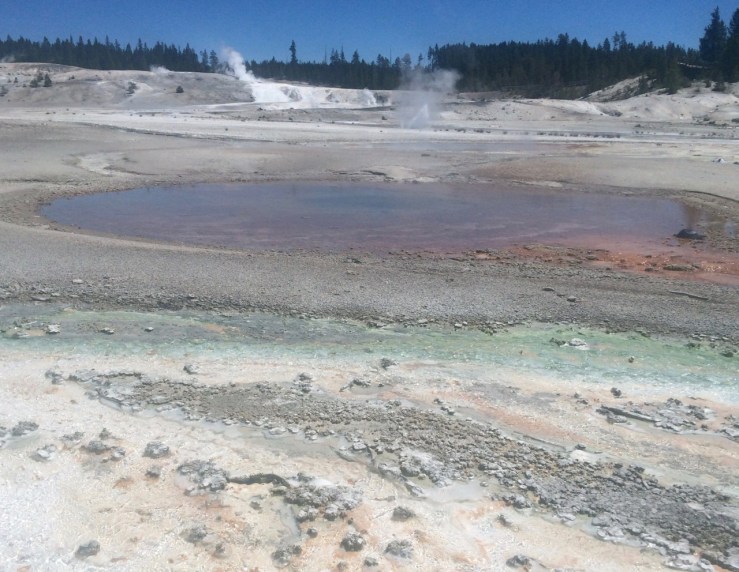
Pic: Whirlygig Geyser and Porcelain Basin. The orange color comes from deposits of iron oxide (“rust”); the green and white in the foreground are thermophilic bacteria. Norris Geyser Basin, Yellowstone NP, WY
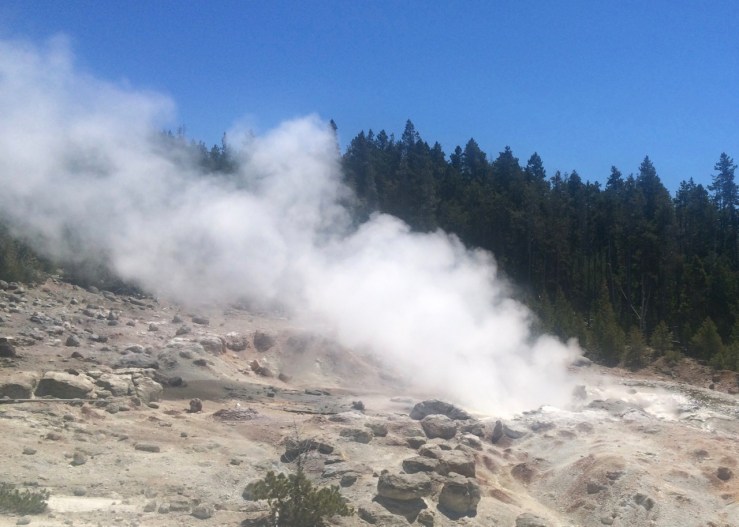
Pic: Steamboat Geyser lying in wait. Capable of propelling water over 300′ into the sky, its last eruption was in 2014. Norris Geyser Basin, Yellowstone NP, WY

Pic: Cistern Spring. The different colors come from thermophilic bacteria adapted to different temperatures. Norris Geyser Basin, Yellowstone NP, WY
Eventually, four miles of walking in the sun and the constant rotten-egg smell of sulfur took their toll. I gave the basin one last look, yielded my parking spot to other visitors about to have their minds blown, and headed west toward this-worldly civilization.
[1] This title is disputed, of course; an issue summarized neatly by National Parks Traveller.
 Danger Beyond This Point